 how-to
How to Fix Flickering Lights in an Old House
Table of Contents
- Why Flickering Lights in an Old House Deserve Immediate Attention
- Step 1: Check the Simple Causes First
- Flickering Lights When Appliances Turn On: What It Means
- Diagnosing Wiring Problems: Loose Neutrals, Old Wiring, and Voltage Fluctuations
- Signs Your Home Needs Rewiring Beyond Flickering Lights
- Electrical Panel Upgrade Cost: What to Expect
- When to Stop Troubleshooting and Call a Licensed Electrician
- Frequently Asked Questions
Last Updated: August 30, 2026
Why Flickering Lights in an Old House Deserve Immediate Attention
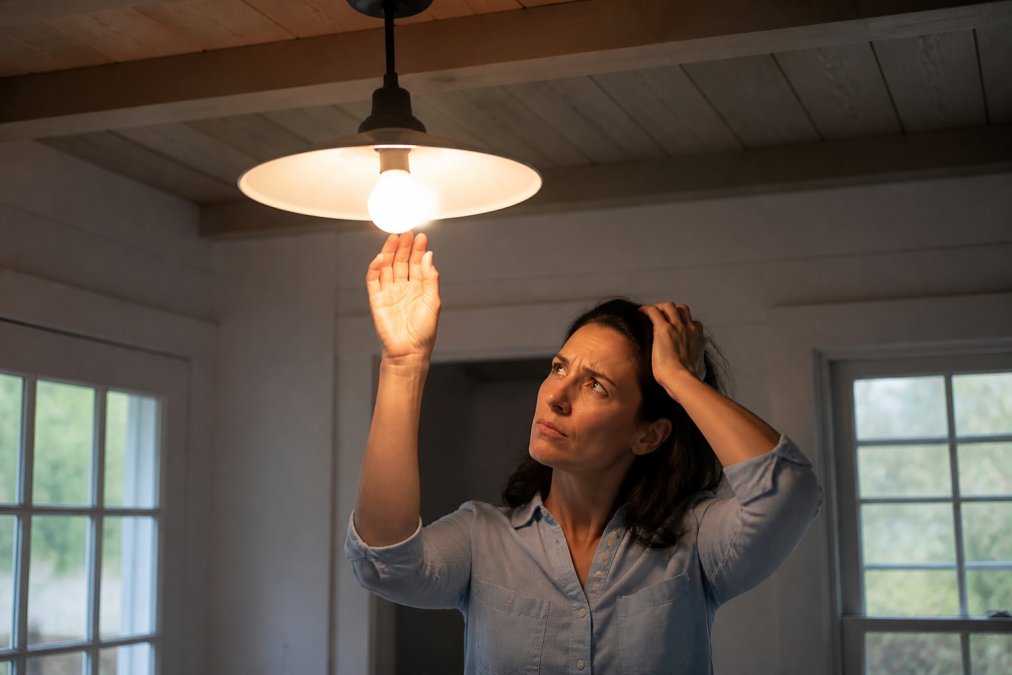
Flickering lights in an old house are not a quirk to live with, they are a warning sign and often an active electrical hazard. Older homes were engineered for a fraction of today's electrical load. A house built in the 1950s or earlier was designed around a handful of appliances. Today, those same walls carry HVAC systems, EV chargers, smart home devices, and dozens of always-on electronics. When the wiring can't handle that load, flickering lights are often the first symptom.
This guide covers every major cause of flickering lights, from simple fixes you can handle yourself to wiring problems requiring a licensed electrician. One important distinction: occasional flicker when a large appliance starts is different from constant, unpredictable strobe-effect flickering. The first can be normal. The second rarely is.
Step 1: Check the Simple Causes First
Before calling anyone, rule out the obvious culprits. Many flickering lights trace back to issues you can diagnose in five minutes without touching any wiring.
Loose Bulbs and Faulty Fixtures
A loose bulb in its fixture base is the single most common cause of flickering and the easiest fix. The bulb makes intermittent contact with the terminal screw, interrupting the circuit just enough to cause a flicker. Tighten the bulb or replace it entirely.
Check the fixture itself. An aging fixture with a corroded socket or worn spring can cause the same intermittent contact. If tightening the bulb doesn't stop the flicker, the fixture may need replacement. Always turn off the circuit breaker before touching any wiring inside a fixture.
Incompatible Dimmer Switches and LED Bulb Compatibility
Old dimmer switches were designed for incandescent bulbs. LED bulbs operate on a fundamentally different principle, and many older dimmers cannot regulate their lower wattage correctly, causing persistent flicker or buzz.
According to the ENERGY STAR LED compatibility guidance, not all LED bulbs are dimmable, and using a non-compatible dimmer can cause flickering, reduced bulb lifespan, and damage to the dimmer switch itself.
The fix: replace the dimmer switch with one rated for LED loads, or switch to a non-dimmable LED bulb. Check the bulb packaging for "dimmable" labeling and match it to a compatible dimmer.
Flickering Lights When Appliances Turn On: What It Means
Flickering lights when appliances turn on points to a specific cause: high-amperage devices drawing a sudden surge of current and causing a momentary voltage drop across the circuit. This is called a voltage fluctuation or voltage sag.
When a refrigerator compressor, air conditioner, or washing machine starts up, it pulls several times its running amperage for a fraction of a second. If the wiring or electrical panel can't absorb that surge cleanly, the voltage dips briefly across other circuits, and lights flicker.
A brief, single flicker when a large appliance starts is within normal range. Sustained flickering, flickering affecting multiple rooms simultaneously, or flickering when no appliance is running is not normal.
If your lights flicker every time the HVAC kicks on, the likely explanations are:
- The circuit carrying the appliance is undersized for its amperage draw
- The electrical panel is near or at capacity
- There is a loose connection somewhere in the circuit
- The service entrance wiring is deteriorated or undersized
Flickering lights when appliances turn on is a load-related symptom, not a bulb problem. The diagnosis needs to start at the panel.
Diagnosing Wiring Problems: Loose Neutrals, Old Wiring, and Voltage Fluctuations
Wiring-related flickering demands the most attention. These causes range from a single loose connection to a systemic wiring integrity problem affecting the entire home.
Loose Neutral Wire Connections
A loose neutral wire is one of the most dangerous causes of flickering lights and one of the hardest to diagnose without professional equipment. The neutral wire completes the circuit and carries current back to the electrical panel. When that connection is loose, at the panel, junction box, or anywhere along the circuit, the voltage becomes unstable.
Symptoms include erratic flickering, unusually bright or dim lights, or behavior that varies depending on what else is running. In severe cases, a loose neutral can cause voltage fluctuations that damage appliances and create an arc fault risk. Arc faults are a leading cause of residential electrical fires.
A loose neutral at the main panel is a whole-house problem. A loose neutral at a junction box affects only downstream fixtures. Either way, diagnosis and repair require a licensed electrician with a multimeter.
Knob-and-Tube and Aluminum Wiring Diagnostics
Older homes present two specific wiring systems requiring separate diagnostic approaches.
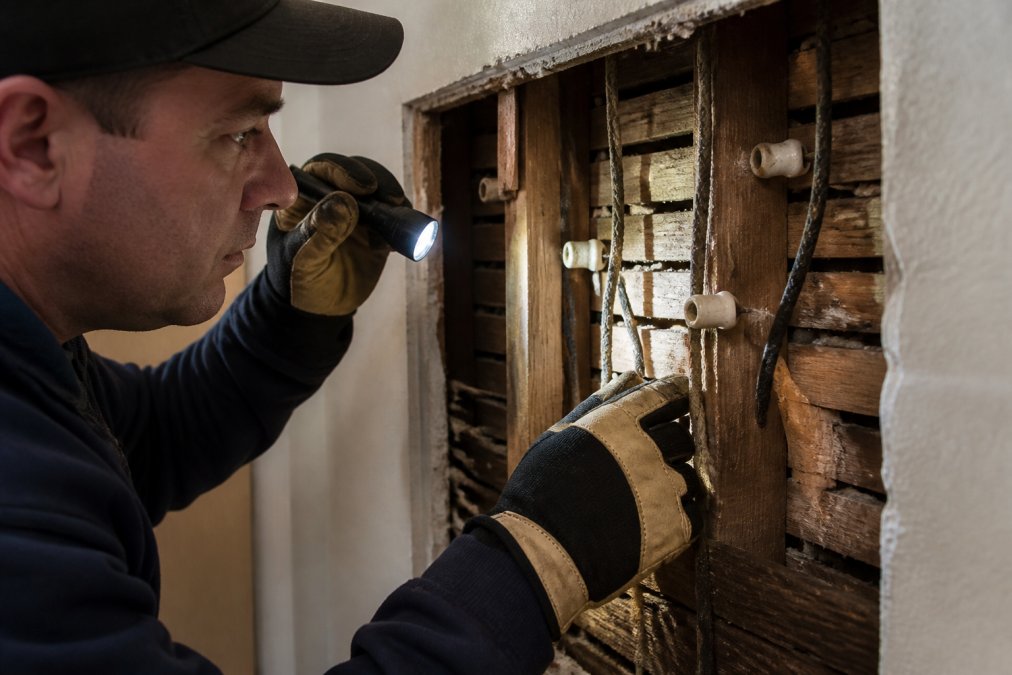
Knob-and-tube wiring, used in homes built roughly before 1950, consists of single-conductor copper wires run through ceramic knobs and tubes with no grounding conductor. The wiring itself can still function when intact, but problems arise from decades of modifications: insulation added directly over wires (trapping heat), splices made outside proper junction boxes, and connections that have oxidized and loosened. Wire oxidation at connection points creates resistance, heat, and voltage instability.
If your home has knob-and-tube wiring, flickering lights are a serious diagnostic flag. The Consumer Product Safety Commission guidance on home electrical safety identifies deteriorated older wiring as a significant fire risk.
Aluminum wiring, common in homes built between roughly 1965 and 1973, carries its own risks. Aluminum expands and contracts more than copper under load cycles, gradually loosening connections at outlets, switches, and the panel. Loose aluminum connections cause flickering, overheating, and arc fault risk. Any home with aluminum wiring should have its connections inspected by an electrician familiar with remediation techniques.
Utility Company and Service Entrance Issues
Not every flickering problem originates inside your home. The utility company's service entrance, where their lines connect to your meter and main panel, can be a source of voltage fluctuations affecting the entire house.
Symptoms include flickering affecting every circuit simultaneously or voltage readings at the panel that fall outside the normal range. Contact your utility provider if you suspect a supply-side issue. Many will send a technician to test voltage at the meter at no charge. If the problem is on their side, it's their repair. If voltage is stable at the meter but unstable inside the panel, the service entrance conductors or main panel are the likely culprits.
Signs Your Home Needs Rewiring Beyond Flickering Lights
Flickering lights are one symptom of a larger problem. Look for these indicators that wiring has reached the end of its reliable service life:
- Outlets or switches that feel warm to the touch
- Burning smell from outlets, switches, or the electrical panel
- Circuit breakers that trip repeatedly under normal loads
- Outlets that spark when you plug something in
- Two-prong ungrounded outlets throughout the home
- Discoloration or scorch marks around outlet covers or switch plates
- Lights that dim when you run multiple appliances simultaneously
- A fuse box rather than a circuit breaker panel
Any one of these, combined with flickering lights, moves the situation from "troubleshoot first" to "call a licensed electrician now." Several together constitute an urgent electrical hazard.
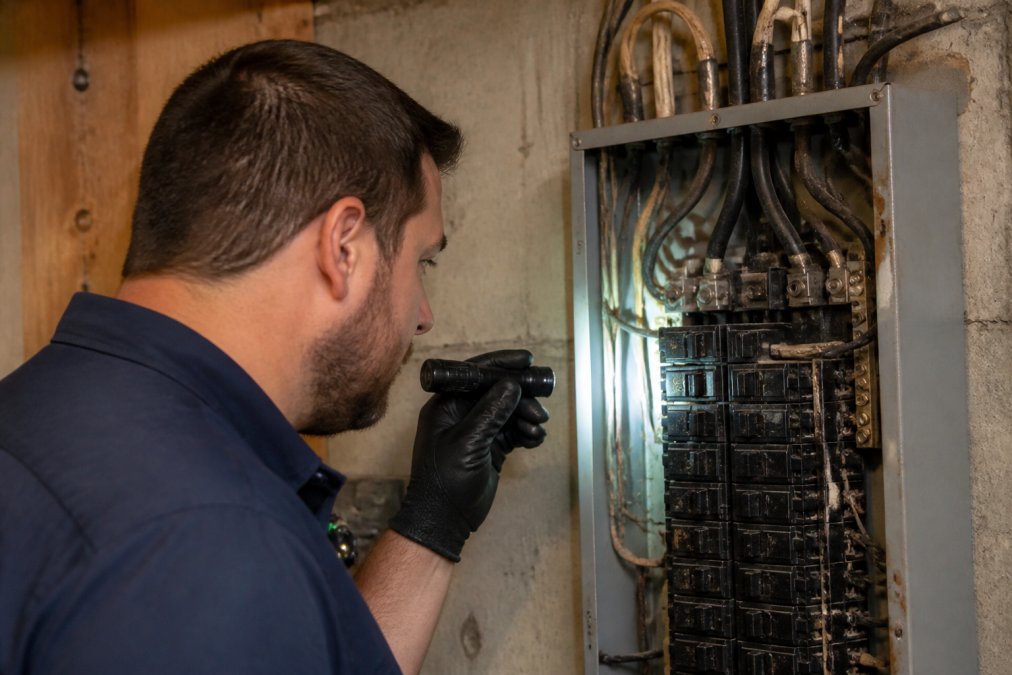
The electrical code in the United States, governed by the National Electrical Code published by NFPA, sets minimum standards for wiring safety. Homes that haven't been updated in decades often fall significantly short of current code, affecting both safety and insurance coverage.
Electrical Panel Upgrade Cost: What to Expect
The electrical panel upgrade cost question is one of the most common things homeowners ask when investigating flickering lights. Pricing varies significantly based on scope, existing panel condition, local permit requirements, and your home's electrical system configuration.
What goes into the cost of an electrical panel upgrade:
| Factor | What Affects the Price |
|---|---|
| Panel amperage | 100A vs. 150A vs. 200A or 400A service |
| Existing wiring condition | Aluminum or knob-and-tube adds complexity |
| Permit and inspection fees | Varies by municipality |
| Service entrance upgrade | May be needed if conductors are undersized |
| Grounding system | Older homes often lack proper grounding |
| Number of circuits | More circuits means more breakers and labor |
For accurate pricing, consult a licensed electrician who has physically assessed your panel and wiring. Dragons Electric offers full consultations to walk through your options and provide clear cost estimates before any work begins.
When to Stop Troubleshooting and Call a Licensed Electrician
The DIY troubleshooting line is clear: once you've ruled out loose bulbs, incompatible dimmers, and LED compatibility issues, stop. Everything beyond that point involves the wiring, panel, or service entrance, all requiring a licensed electrician.
Stop troubleshooting and call a professional when:
- Flickering persists after replacing bulbs and the dimmer switch
- The flicker affects multiple rooms or the entire house
- You find warm outlets, burning smells, or scorch marks
- Your home has knob-and-tube or aluminum wiring
- Circuit breakers are tripping repeatedly
- The flicker started suddenly rather than developing gradually
- You see signs of arcing or hear buzzing from outlets or the panel
A licensed electrician will use a multimeter to measure voltage stability at the panel, check the neutral connection at the main bonding point, inspect circuits for loose connections, and assess wiring integrity. This diagnostic process requires working near energized components, not a task for improvisation.
The cost of a professional diagnostic call is small compared to the cost of an electrical fire or failed home inspection. Flickering lights in an old house are frequently the first visible sign of a problem developing inside the walls for years. Catching it early is always cheaper than reacting after something fails.
Flickering lights in an old house are a diagnostic problem, not a cosmetic one. If you've worked through the simple fixes and the flicker persists, the wiring deserves a professional assessment. Dragons Electric specializes in residential electrical assessment, panel upgrades, and full rewiring for older homes throughout the Capital District. Our team brings hands-on experience with historic home wiring, a clear consultation process, and a commitment to finishing the job correctly the first time. Schedule your consultation with Dragons Electric and get a straight answer on what your home actually needs.
Frequently Asked Questions
When should I be worried about flickering lights in my house?
Flickering lights that affect multiple rooms, happen every time a large appliance starts, or come with burning smells, warm switch plates, or tripped breakers are serious warning signs. A single bulb flickering occasionally is usually a loose bulb or an incompatible dimmer. Whole-house flickering or flickering tied to a specific circuit points to a loose neutral wire, faulty breaker, or deteriorating wiring, all of which create arc fault and electrical hazard risks that need professional evaluation.
Are flickering lights a sign of loose wiring?
Yes, loose wiring is one of the most common causes of flickering lights in an old house. A loose neutral wire at the electrical panel, a junction box, or a fixture base can cause voltage fluctuations across an entire circuit. In homes with knob-and-tube or aluminum wiring, wire oxidation at terminal screws makes loose connections even more likely over time. If tightening the bulb and replacing the switch doesn't stop the flicker, a wiring inspection is the right next step.
Can a bad breaker cause flickering lights?
A failing circuit breaker can absolutely cause flickering lights. When a breaker makes poor internal contact, it creates resistance that leads to voltage fluctuations on that circuit. You may also notice the breaker runs warm to the touch or trips without an obvious overload. This is a job for a licensed electrician, replacing a breaker requires working inside the electrical panel, where live bus bars remain energized even with the main breaker off.
Do flickering lights mean I need an electrical panel upgrade?
Not always, but sometimes. Flickering lights caused by an undersized panel struggling with today's electrical loads, especially in older homes still running on 60- or 100-amp service, can be resolved with a panel upgrade. If your flickering lights happen when appliances turn on and your breakers trip frequently, your panel's amperage may no longer match your home's demand. A licensed electrician can assess whether the panel is the root cause or whether a targeted wiring repair will solve the problem.
This article was written using GrandRanker
Frequently Asked Questions
When should I be worried about flickering lights in my house?
Flickering lights that affect multiple rooms, happen every time a large appliance starts, or come with burning smells, warm switch plates, or tripped breakers are serious warning signs. A single bulb flickering occasionally is usually a loose bulb or an incompatible dimmer. Whole-house flickering or flickering tied to a specific circuit points to a loose neutral wire, faulty breaker, or deteriorating wiring — all of which create arc fault and electrical hazard risks that need professional evaluation.
Are flickering lights a sign of loose wiring?
Yes, loose wiring is one of the most common causes of flickering lights in an old house. A loose neutral wire at the electrical panel, a junction box, or a fixture base can cause voltage fluctuations across an entire circuit. In homes with knob-and-tube or aluminum wiring, wire oxidation at terminal screws makes loose connections even more likely over time. If tightening the bulb and replacing the switch doesn't stop the flicker, a wiring inspection is the right next step.
Can a bad breaker cause flickering lights?
A failing circuit breaker can absolutely cause flickering lights. When a breaker makes poor internal contact, it creates resistance that leads to voltage fluctuations on that circuit. You may also notice the breaker runs warm to the touch or trips without an obvious overload. This is a job for a licensed electrician — replacing a breaker requires working inside the electrical panel, where live bus bars remain energized even with the main breaker off.
Do flickering lights mean I need an electrical panel upgrade?
Not always, but sometimes. Flickering lights caused by an undersized panel struggling with today's electrical loads — especially in older homes still running on 60- or 100-amp service — can be resolved with a panel upgrade. If your flickering lights happen when appliances turn on and your breakers trip frequently, your panel's amperage may no longer match your home's demand. A licensed electrician can assess whether the panel is the root cause or whether a targeted wiring repair will solve the problem.